
VIP's About Swamiji
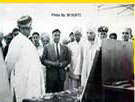
President A P J Abdul Kalam
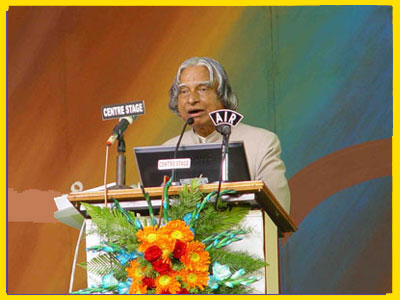
100th Birthday Celebrations — 2007
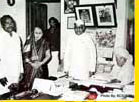
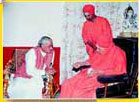
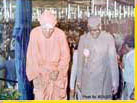
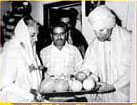
His Excellency, the President of India, Dr. A.P.J. Abdul Kalam, was the Chief Guest at the 100th Birthday and Guruvandana Celebrations of His Holiness Dr. Sree Sree Sivakumara Swamiji, held on 8th April 2007 at Sree Siddaganga Mutt, Tumkur. Recalling his earlier visit to the Mutt in 2006, Dr. Kalam once again expressed his deep reverence for Sree Swamiji, and shared a message of “Giving” that he composed and recited as a poem before the packed audience.
His Message of Giving
President Kalam later repeated this message at the Indian Parliament’s 150th Anniversary of the First War of Independence, and again at the Kabir Puraskar and National Communal Harmony Awards ceremony, describing Sree Swamiji as an enduring example of the spirit of giving — a tireless mission for socio-economic development, education, and the eradication of hunger. He noted that over seven decades, Sree Swamiji had founded more than 125 educational institutions, and that the Math’s free boarding home now served over 8,000 students, alongside 2,000 pilgrims and visitors fed daily.
O my fellow citizens,
In giving, you receive happiness
In Body and Soul.
You have everything to give.
If you have knowledge, share it.
If you have resources, share with the needy.
Use your mind and heart,
To remove the pain of the suffering,
and, cheer the sad hearts.
In giving, you receive happiness.
Almighty will bless your actions.
On Education
President Kalam observed that Sree Swamiji had imparted spiritual guidance to all, stressing the importance of moral science in schools and colleges — establishing institutions where teachers were trained to impart moral education rooted in Indian culture and heritage. Through his mission of educating millions of poor students, there was no place for pettiness in the system he built; it was designed instead to enhance individual self-respect and create a more beautiful, happy world.
Former Prime Minister Vajpayee
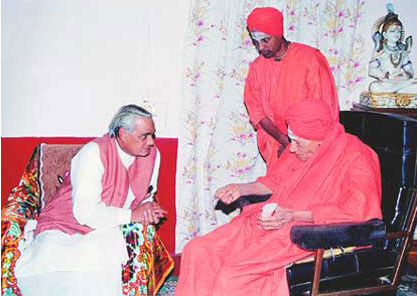
ADDRESS BY SHRI ATAL BEHARI VAJPAYEE ON THE OCCASION OF 83rd SAMSKRITOTSAVA OF THE SANSKRIT COLLEGE AT SREE SIDDAGANGA MUTT
New Year Address
May the New Year be auspicious to you. But along with this desire for progress, we will also have to work hard to make the coming year a happy one. At Siddaganga, one observes several Gangas flowing — the Ganga of Karma, of Knowledge, of consideration, and of compassion. A day-and-night Yagya of knowledge has been going on here for centuries.
On Sree Swamiji
I am seeing Sree Swamiji today again after many years — no change at all. He reads without spectacles; I need mine. He stood throughout his speech, while I, sitting, wished I too could stand. A spiritual power in the form of Swamiji charges this entire environment — this is not the play of the body alone, but an inspiring moral force at its root.
A Social Revolution Through Education
Years ago, when the weak, the oppressed, and the so-called backward were denied the study of Sanskrit, a social revolution was brought about here by opening the study of Sanskrit and the Vedas to one and all — preparing a blueprint for the construction of a new India. Doors of knowledge are open to everyone, with special attention given to children from rural areas who are otherwise denied opportunity.
In ancient days, we had Gurukulas, where opportunities for study were available to all without discrimination — much as Krishna and Sudhama once studied together at the Gurukula of Rishi Sandipan. The same spirit is seen here. Government resources alone are limited; institutions like Siddaganga show what non-government organisations can achieve, and the entire nation should try to follow this example.
Knowledge and Character
Knowledge is not limited to the study of Sanskrit alone — it is essential to study modern science alongside ancient wisdom. Swamiji himself spoke of science and technology, but warned that spiritual training must accompany it. Science is like fire: it can cook food, or it can burn the house down. It must be put to good use.
The same knowledge, money, or power, placed in different hands, produces different outcomes. A good person uses knowledge to help others, uses wealth for philanthropy, and uses power to protect the weak. A crook misuses each of these — for vanity, for quarrel, for trouble. The difference lies not in what is given, but in who receives it.
How does a person become good? Through two things: training, and proper upbringing — samskar. Government schools provide training, but not always samskar. A college certificate cannot guarantee what kind of life a person will lead after leaving its gates. But one educated at Siddaganga leaves with samskar — carrying with him not just knowledge, but a wealth of cultural values, ready to be useful to society.
Work as Worship
Sree Basaveswaraji taught us to consider work as worship — work itself is heaven. We should not shirk working with our hands. Today’s literate youth often wants only to sit on a chair in an office, yet one cannot farm, or run an industry, sitting on a chair. No work is inferior.
We shall work together, speak together, and eat together — ensuring that no one is left hungry, and that all are counted and included. This is an ancient, Vedic concept that needs to be revived and practiced, so that we build a Bharat where there is no hunger, no fear, and no corruption. Sree Swamiji is our ideal for this.
Closing
I am blessed by Sree Swamiji, who has given me the occasion to visit this Math many times. May this great celebration be a success. I am deeply gratified by his darshan today, and I thank you all for coming in such large numbers.
Namaskar.
Former Chief Minister Nijalingappa
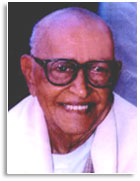
A DIVINE SANYASI
Honesty, service, determination, fortitude, purity, magnanimity, tenderness, truth, love, compassion, and a lofty aim — any one of these qualities renders an individual honourable in the eyes of society. Sree Sivakumara Swamiji of Sree Siddaganga Mutt is a confluence of all these virtues, a fortune for the country at large. Added to this, he possesses deep learning and dispassion. Naturally, honour, affection, and admiration have been showered upon him across Karnataka, with people approaching him constantly to seek his darshan, his blessings, and his thought-provoking, soul-stirring words.
Sree Swamiji’s Mutt is not large in size, nor is its property considerable. His predecessors devoted their time to asceticism and worship, conducting as much Dasoha as they could, sustained by small contributions from people in the vicinity.
Learned, virtuous, and talented even as a student, the present Swamiji assumed his holy office in 1930. Rather than devoting himself only to religious practice, he plunged into the service of humanity, believing that real progress for the country required widening the intellectual horizons of ordinary people — and that this could only come through the education of every child.
He chose to establish primary and secondary schools first, colleges later. While the wealthy face little difficulty educating their children, the poor face many — rural children are often compelled to earn coolie wages just to help sustain their families, with no hope beyond one more morsel of food or an inch more of clothing. Realising this, Sree Swamiji arranged free education, boarding, and stationery for them — a privilege extended for well over seven decades.
Though the Guru of a Veerashaiva Mutt, Sree Swamiji is too broad-minded to be confined to caste — educational facilities have been extended to all, including non-Veerashaivas and Harijans, earning him accolades and cooperation from the haves and have-nots alike. Without great wealth to draw upon, his sphere of activity has nonetheless broadened little by little, now including an engineering college producing thousands of graduates — a rare achievement, especially compared to institutions run by far wealthier Mutts with many affluent followers. His diversified activities are a testament to his competence and rectitude.
Sree Swamiji has set a fine example in purity, sincerity, administrative competence, and farsightedness — one that other Mutts would do well to emulate. I sincerely hope that his service to a troubled society continues for years to come.
Namaskar.